
Where to Find Petrified Wood: Best Locations, Laws, and Collecting Tips
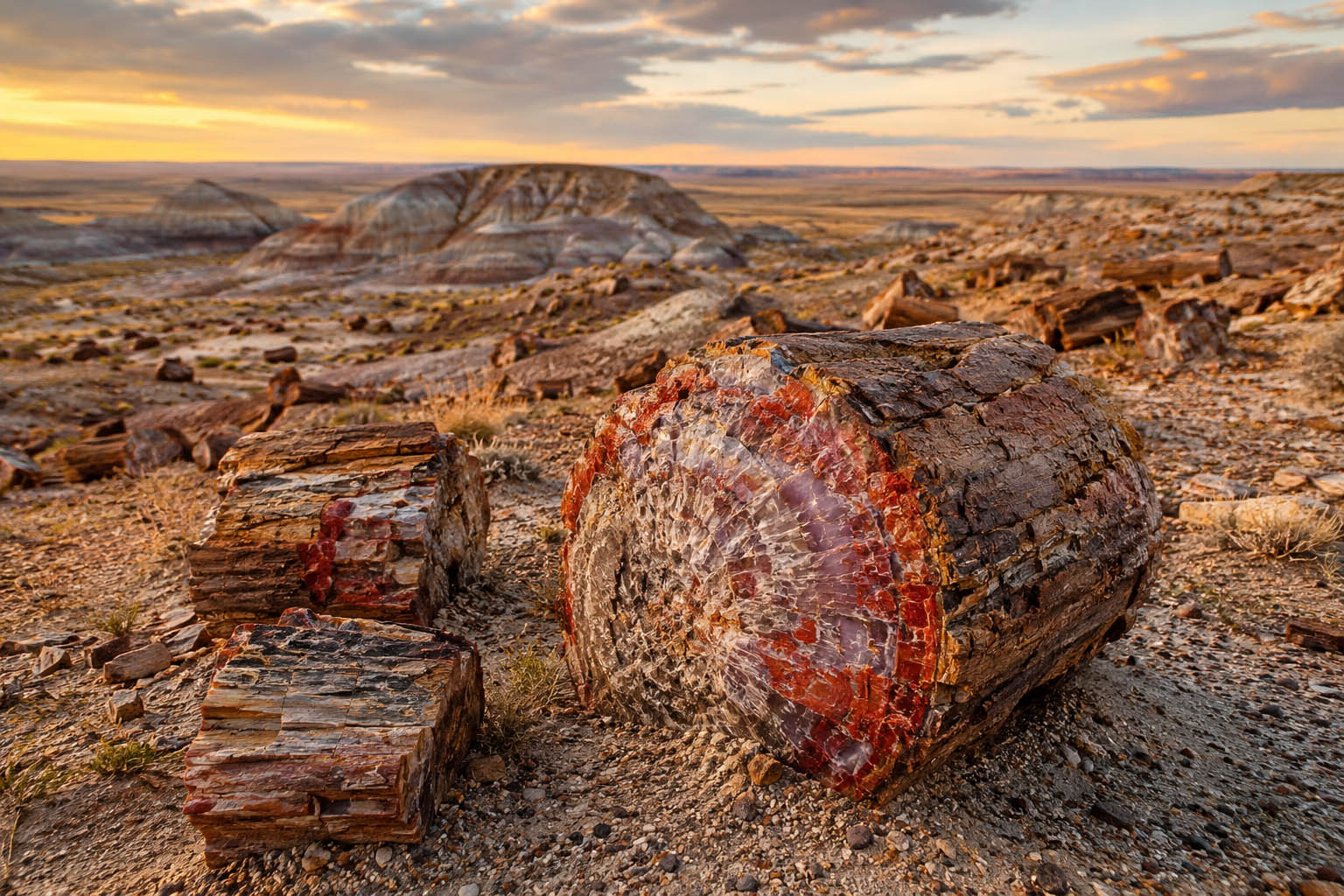 Petrified wood is found in regions where ancient forests were buried and mineralized over millions of years. The best locations usually contain:
- volcanic ash deposits
- ancient river systems
- sediment-rich basins
- fossil-bearing rock layers
Some areas produce small scattered fragments, while others contain massive fossilized logs large enough for museum displays and furniture slabs.
Arizona is the most famous petrified wood location in the United States, but important deposits also exist in:
- Oregon
- Wyoming
- Utah
- Madagascar
- Indonesia
- Argentina
Collectors, rockhounds, fossil enthusiasts, and furniture buyers all search for petrified wood for different reasons.
Where Is Petrified Wood Found?
Petrified wood is most commonly found in ancient volcanic and sedimentary regions where buried trees were exposed to mineral-rich groundwater over millions of years.
Famous locations include:
- Petrified Forest National Park in Arizona
- Oregon fossil beds
- Indonesian fossil forests
- Madagascar deposits
- Argentina’s petrified forests
Many fossil-rich desert regions also contain smaller scattered specimens.
Why Petrified Wood Forms in Certain Places
Petrified wood requires very specific geological conditions.
The process usually involves:
- rapid burial
- low oxygen
- mineral-rich groundwater
- long-term geological stability
Volcanic regions are especially important because volcanic ash often supplies silica, which helps mineralize buried wood.
Ancient floodplains and river systems also create ideal fossilization environments.
Petrified Forest National Park (Arizona)
Petrified Forest National Park is the most famous petrified wood location in the United States.
The park contains:
- massive fossilized logs
- colorful mineralized wood
- Late Triassic fossils
- ancient desert landscapes
Many of the fossilized trees are more than 200 million years old.
Arizona petrified wood is especially known for:
- red coloration
- yellow mineralization
- strong grain preservation
Can You Collect Petrified Wood in the National Park?
No.
Removing petrified wood from Petrified Forest National Park is illegal.
Even small fragments are protected under federal law.
The park closely monitors fossil theft because large amounts were removed historically before protections became stricter.
Oregon Petrified Wood Locations
Oregon contains several important fossil wood areas.
The state is known for:
- colorful specimens
- ancient volcanic geology
- exposed fossil beds
Popular collecting regions include:
- central Oregon
- eastern Oregon
- areas near ancient volcanic flows
Some Oregon specimens contain:
- opalized wood
- agatized wood
- highly silicified material
Collection rules vary depending on land ownership.
Wyoming and Yellowstone Region
The Yellowstone region contains fossil forests created by volcanic activity millions of years ago.
Wyoming and nearby states contain:
- fossilized stumps
- upright fossil forests
- silicified wood deposits
Many important sites are protected inside parks or public lands.
Utah Petrified Wood
Utah is another well-known source of petrified wood in the American Southwest.
The state produces:
- colorful desert specimens
- polished collector pieces
- rough landscaping material
Public land regulations vary widely, so collectors should always verify rules before removing material.
Madagascar Petrified Wood
Madagascar is famous for producing highly colorful petrified wood.
Material from Madagascar often displays:
- strong red coloration
- vivid mineral contrast
- exceptional polish quality
Large slabs from Madagascar are commonly used in:
- luxury decor
- furniture
- collector displays
Indonesian Petrified Wood
Indonesia is one of the world’s largest commercial sources of furniture-grade petrified wood.
The region is especially important because it produces:
- large fossil logs
- massive cross-sections
- slab material suitable for tables
Many luxury petrified wood dining tables originate from Indonesian fossil deposits.
Argentina’s Petrified Forests
Argentina contains major fossil forest sites with:
- ancient conifer fossils
- massive petrified trunks
- protected paleontological areas
Some areas preserve prehistoric forests from over 150 million years ago.
Can Petrified Wood Be Found in Rivers and Deserts?
Yes.
Erosion gradually exposes petrified wood over time.
Collectors sometimes find small fragments in:
- dry riverbeds
- desert washes
- exposed hillsides
- gravel deposits
Rainfall and erosion often uncover new material naturally.
How to Identify Areas Likely to Contain Petrified Wood
Experienced collectors look for regions with:
- ancient volcanic activity
- sedimentary rock layers
- fossil-bearing formations
- exposed erosion zones
Petrified wood is especially common in areas with:
- silica-rich geology
- prehistoric forest history
- exposed desert terrain
Geological maps can help identify promising fossil-bearing formations.
Is It Legal to Collect Petrified Wood?
Collection laws depend entirely on location.
National Parks
Collecting is illegal inside U.S. national parks.
This includes:
- Petrified Forest National Park
- Yellowstone National Park
- protected fossil monuments
Penalties can be severe.
Public Lands
Some BLM lands allow limited collecting for personal use.
Rules vary depending on:
- state regulations
- fossil classification
- land management policies
Always verify current regulations before collecting.
Private Land
Private land collection usually requires permission from the landowner.
Commercial fossil excavation often occurs on private property.
International Laws
Some countries restrict fossil exportation.
Buyers should verify legal sourcing when purchasing imported petrified wood.
Best Places to Buy Petrified Wood Legally
Many buyers prefer purchasing legally sourced material rather than collecting.
Reliable sources include:
- fossil dealers
- mineral shops
- lapidary suppliers
- furniture studios
- geological retailers
Commercially sold material is often sourced from:
- private mines
- permitted excavations
- imported fossil deposits
What Types of Petrified Wood Are Most Commonly Found?
Collectors commonly find:
- small rough fragments
- partial logs
- polished slices
- agatized wood
- silicified wood
Large intact logs are much rarer.
Furniture-grade slabs are especially difficult to source because large fossilized trunks are uncommon.
Why Desert Regions Often Contain Petrified Wood
Desert environments expose fossils effectively because:
- vegetation is sparse
- erosion remains visible
- sediment layers are exposed
Dry climates also preserve exposed fossils better than wet environments.
That is why many famous petrified wood locations occur in arid regions.
What to Bring When Looking for Petrified Wood
Collectors often carry:
- gloves
- rock hammer
- GPS or maps
- water
- collection bags
- safety gear
However, collecting tools should only be used where legal.
Many protected areas prohibit excavation entirely.
How to Tell if a Found Specimen Is Petrified Wood
Potential signs include:
- unusual weight
- visible grain structure
- stone hardness
- mineral coloration
- preserved tree-ring patterns
Real petrified wood feels much heavier than ordinary wood.
Is Petrified Wood Rare in Nature?
Small fragments are relatively common in fossil-rich regions.
Large colorful specimens with strong preservation are much rarer.
Most high-end collector material represents only a tiny percentage of overall fossil wood deposits.
FAQ
Where is petrified wood most commonly found?
Arizona is one of the best-known locations, especially around Petrified Forest National Park.
Can you legally collect petrified wood?
It depends on the location. Collecting is illegal in national parks but may be allowed in some public or private lands with permission.
Why is petrified wood common in deserts?
Desert erosion exposes fossil-bearing rock layers and preserves visible fossils well.
What states have petrified wood?
Important U.S. sources include Arizona, Oregon, Utah, Wyoming, and parts of the Yellowstone region.
Where does furniture-grade petrified wood come from?
Many large furniture slabs originate from Indonesia and Madagascar.
Is petrified wood found near volcanoes?
Yes. Volcanic ash often contributes silica that helps fossilize buried wood.
How can you identify petrified wood in nature?
Look for heavy stone-like material with preserved grain patterns, tree rings, and mineral coloration.